
What Is Piriformis Syndrome?
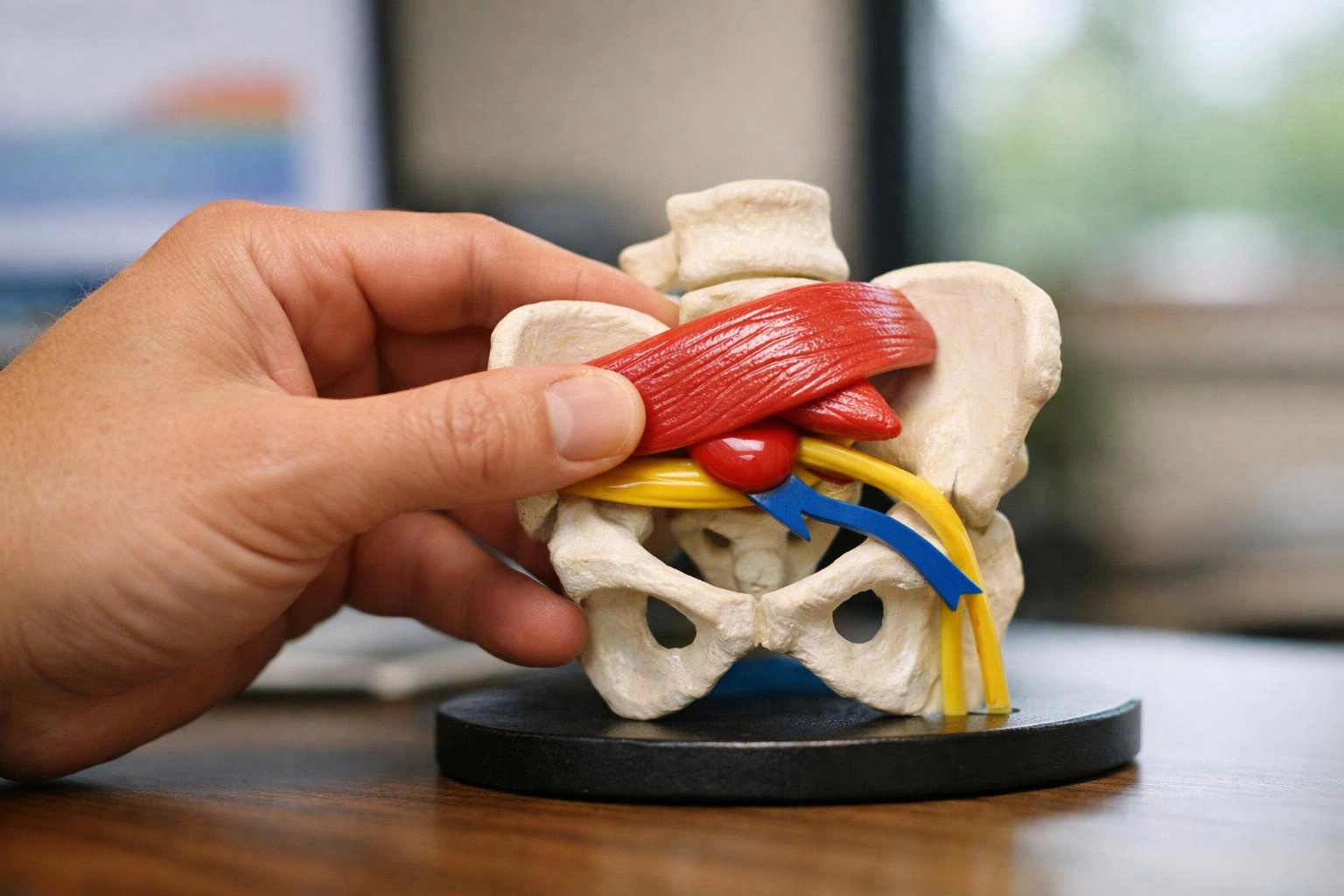
Piriformis Syndrome is a condition in which the piriformis muscle irritates or compresses the sciatic nerve near the buttock. The pattern may produce buttock pain, tingling, or symptoms that travel down the leg. Symptoms can resemble lumbar spine disorders, so examination considers both the hip region and the lower back.
Quick Facts About Piriformis Syndrome
Category
Neuromuscular pain condition
Used for
Describing sciatic nerve irritation near the buttock
Common confusion
Often confused with lumbar spine related sciatica
Also called
Piriformis muscle syndrome, Pseudo-sciatica
Often discussed with
Sciatica Treatment
Key Takeaways About Piriformis Syndrome
- Symptoms often center near the buttock and may extend down the leg.
- Hip movement and lumbar findings help distinguish possible causes.
- Piriformis Syndrome is not identical to every type of sciatica.
How Piriformis Syndrome Works

Piriformis Syndrome involves the relationship between the piriformis muscle and the sciatic nerve as the nerve passes through the buttock region. Changes in muscle tension, local irritation, or nearby tissue pressure can affect how the area feels during sitting, walking, or hip movement. Symptoms may remain near the buttock or follow part of the sciatic nerve pathway.
Related glossary terms: Sciatic Nerve, Lumbar Spine, Nerve Root.
Clinical assessment compares hip movement with findings from the lumbar spine and sciatic nerve. A practitioner may observe movement, check muscle function, and consider whether symptoms change with specific positions. This process helps separate a piriformis related pattern from problems involving a disc, nerve root, or spinal joint.
From the Arrowhead Clinic Chiropractic - Albany team
When we assess Piriformis Syndrome, we review the symptom pattern and examine hip movement, muscle function, and the lumbar spine. Our team considers whether findings point toward local piriformis involvement or another source of sciatic nerve symptoms before selecting care within Sciatica Treatment.
Piriformis Syndrome in Practice: A Real-World Example
A person may report deep buttock discomfort that becomes more noticeable after sitting and sends aching sensations down the back of the leg. During Sciatica Treatment, the examination can compare hip findings with lumbar spine and nerve-related signs.
Related Services
Related Terms
Sciatic Nerve
The sciatic nerve is the body’s largest peripheral nerve, formed by nerve roots in the lower…
Lumbar Spine
The lumbar spine is the lower section of the back, positioned between the thoracic spine and…
Nerve Root
A nerve root is the part of a spinal nerve that branches from the spinal cord…
Myofascial Pain
Myofascial Pain is discomfort that comes from sensitive muscles and the fascia surrounding them. The pain…
Arrowhead Clinic Chiropractic - Albany
Have Questions About Piriformis Syndrome?
Contact Arrowhead Clinic Chiropractic - Albany for practical guidance on Piriformis Syndrome and related chiropractor work in Albany.