
What Is Range Of Motion?
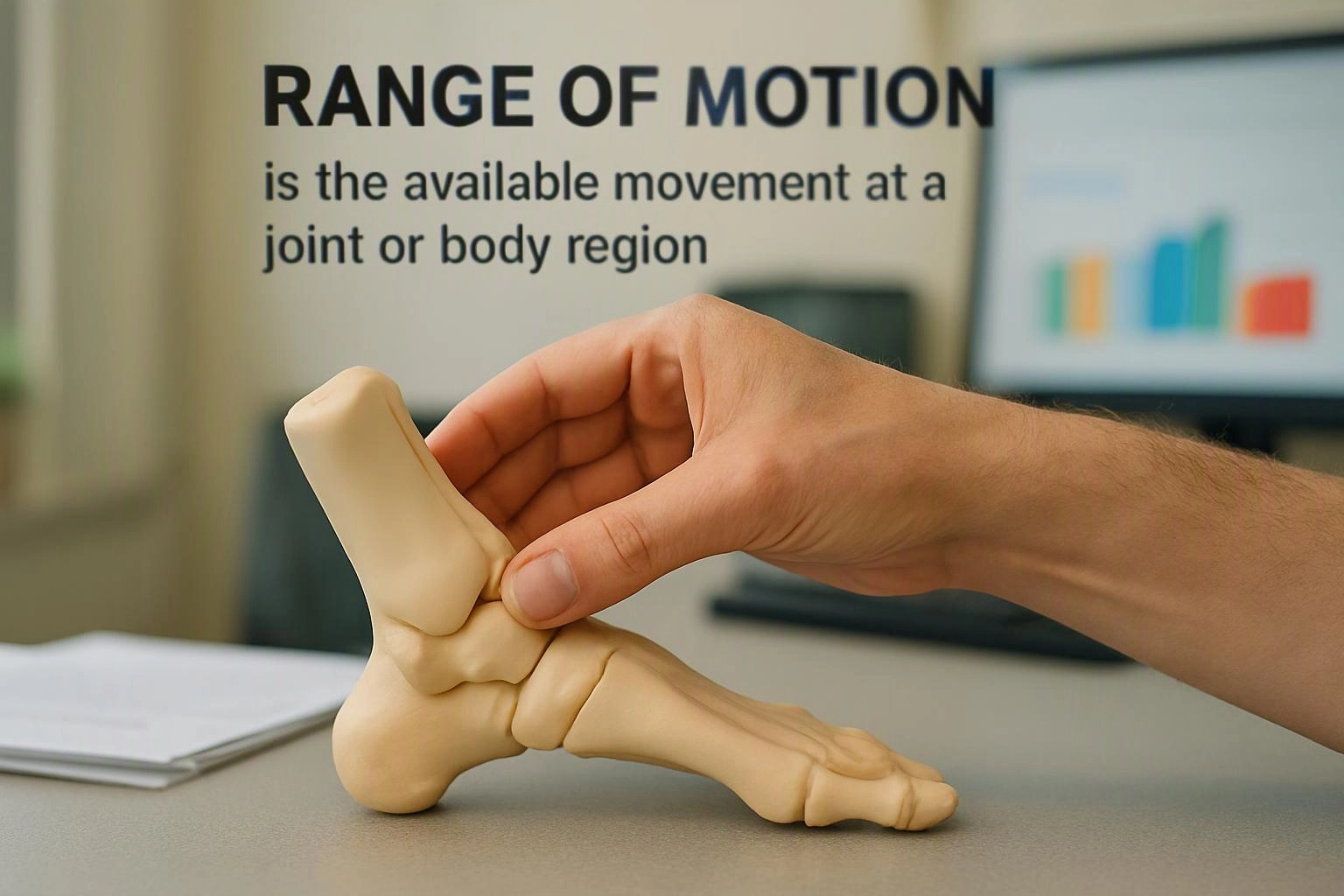
Range Of Motion is the available movement at a joint or body region. It describes how far a person can move a shoulder, neck, or other area in a specific direction. Clinicians may assess active movement performed by the person and passive movement guided by the clinician to identify restrictions, discomfort, or differences between sides.
Quick Facts About Range Of Motion
Category
Physical examination measure
Used for
Assessing joint movement
Common confusion
Movement differs from muscle strength
Also called
ROM, Joint range of motion
Often discussed with
Shoulder Pain Treatment
Key Takeaways About Range Of Motion
- Movement may be active or passive.
- Shoulder motion includes several directions.
- Range Of Motion is not the same as strength.
How Range Of Motion Works
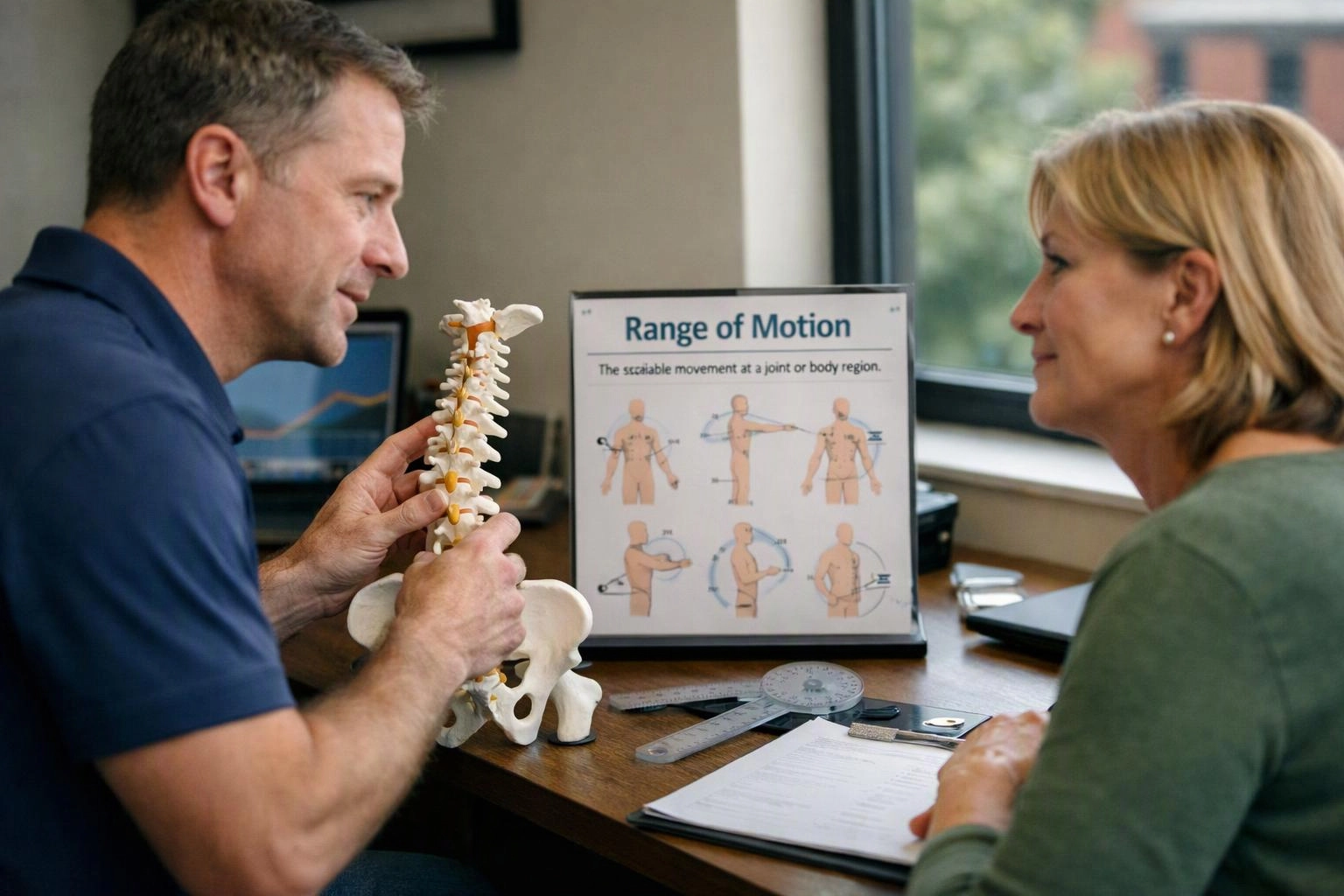
Range Of Motion describes movement by direction, such as lifting the arm forward, moving it outward, or rotating it. A clinician observes active movement while you control the joint. Passive movement occurs when the clinician guides the joint while you relax. Comparing these findings helps separate joint restriction from discomfort or limited muscle control.
Related glossary terms: Rotator Cuff, Manual Muscle Testing, Joint Mobilization.
For shoulder concerns, the assessment may include the shoulder blade, upper arm, and nearby spinal regions. The clinician notes where movement changes, whether discomfort appears during a particular direction, and how the movement compares with the other side. Manual Muscle Testing may be considered alongside motion because a joint can move freely while the surrounding muscles remain weak. Rotator Cuff function can also influence shoulder movement.
From the Arrowhead Clinic Chiropractic - Albany team
When we assess Range Of Motion, we observe how the shoulder moves under the person’s control and during guided movement. We note the direction that changes, the location of discomfort, and whether nearby areas affect the pattern. Our team uses those findings to shape the shoulder pain evaluation and track meaningful changes over time.
Range Of Motion in Practice: A Real-World Example
A person with shoulder pain may lift one arm forward comfortably but have difficulty moving it outward. Comparing active and guided movement helps show whether the limitation relates mainly to discomfort, joint motion, or muscle control.
Related Services
Related Terms
Rotator Cuff
Rotator Cuff is a group of muscles and tendons that surrounds the shoulder joint and supports…
Manual Muscle Testing
Manual Muscle Testing is a clinical assessment that examines muscle strength through controlled movement against the…
Joint Mobilization
Joint mobilization is a manual therapy technique that uses controlled, repeated movements to influence how a…
Arrowhead Clinic Chiropractic - Albany
Have Questions About Range Of Motion?
Contact Arrowhead Clinic Chiropractic - Albany for practical guidance on Range Of Motion and related chiropractor work in Albany.