
What Is the Cervical Spine?
The cervical spine is the neck section of the spinal column, located between the skull and the upper back. It contains vertebrae, discs, joints, nerves, muscles, and supporting ligaments. This region helps support the head, protect the upper spinal cord, and allow movements such as turning, bending, and nodding.
Quick Facts About Cervical Spine
Category
Anatomical spinal region
Used for
Describing neck structure and movement
Common confusion
The cervical spine is not the same as the neck muscles
Also called
Neck spine, Cervical region
Often discussed with
Neck Pain Treatment, Chiropractic Adjustment
Key Takeaways About Cervical Spine
- The cervical spine is the neck portion of the spinal column.
- Its joints and muscles coordinate head and neck movement.
- Neck pain does not always mean a spinal bone problem.
How Cervical Spine Works
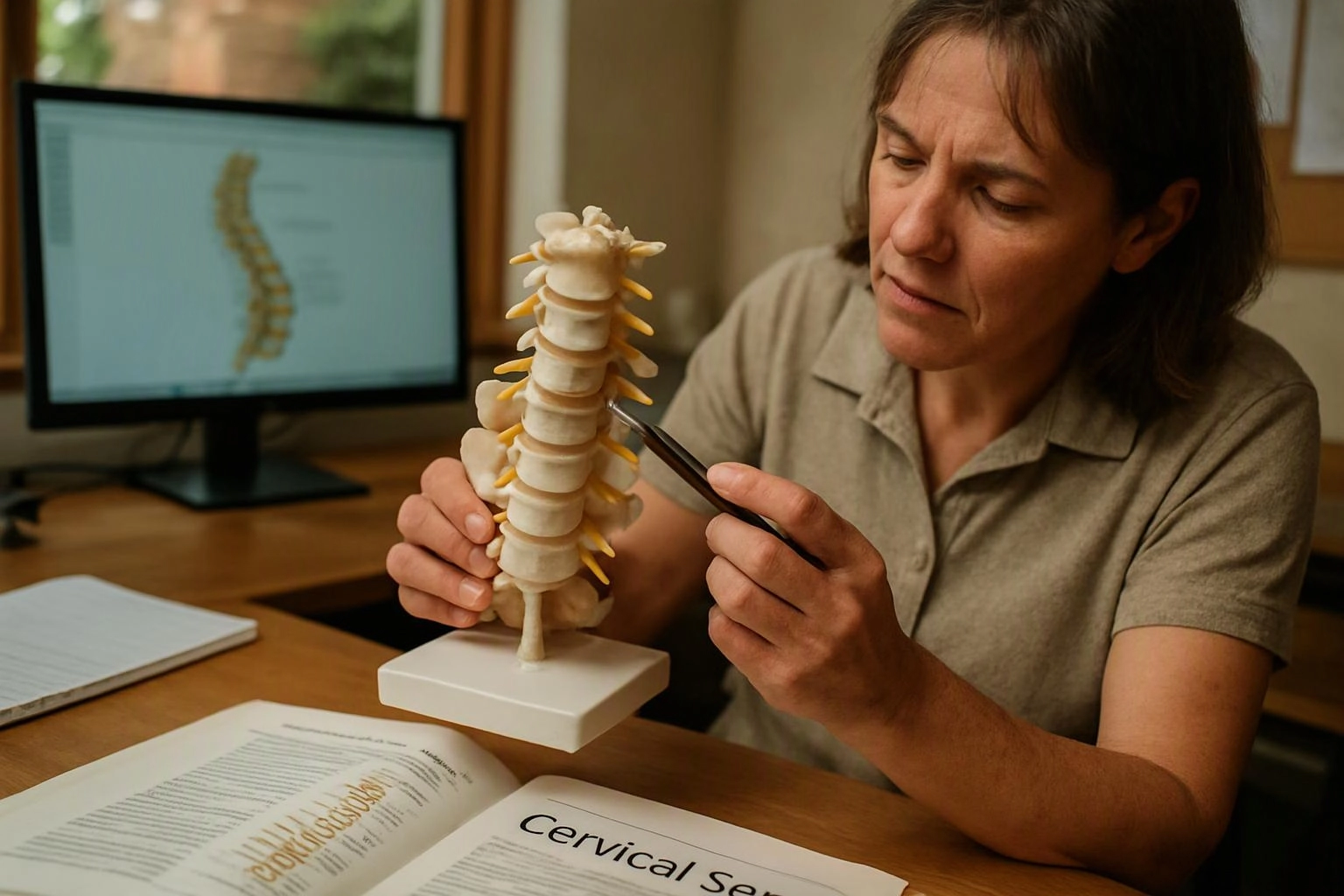
The cervical spine works as a mobile support system for the head and neck. Its vertebrae form a column, while discs help separate neighboring bones. Small joints guide movement, and muscles and ligaments help control posture and stability. Nerves pass through openings near the vertebrae and connect the neck with other parts of the body.
Related glossary terms: Atlas Vertebra, Cervical Radiculopathy, Facet Joint.
Neck movement depends on several structures working together. The spinal cord travels through the central canal, while nerve roots leave the spine through openings between vertebrae. Clinicians may examine posture, tenderness, muscle control, and range of motion to understand how the cervical spine functions during activities such as looking over a shoulder or working at a desk.
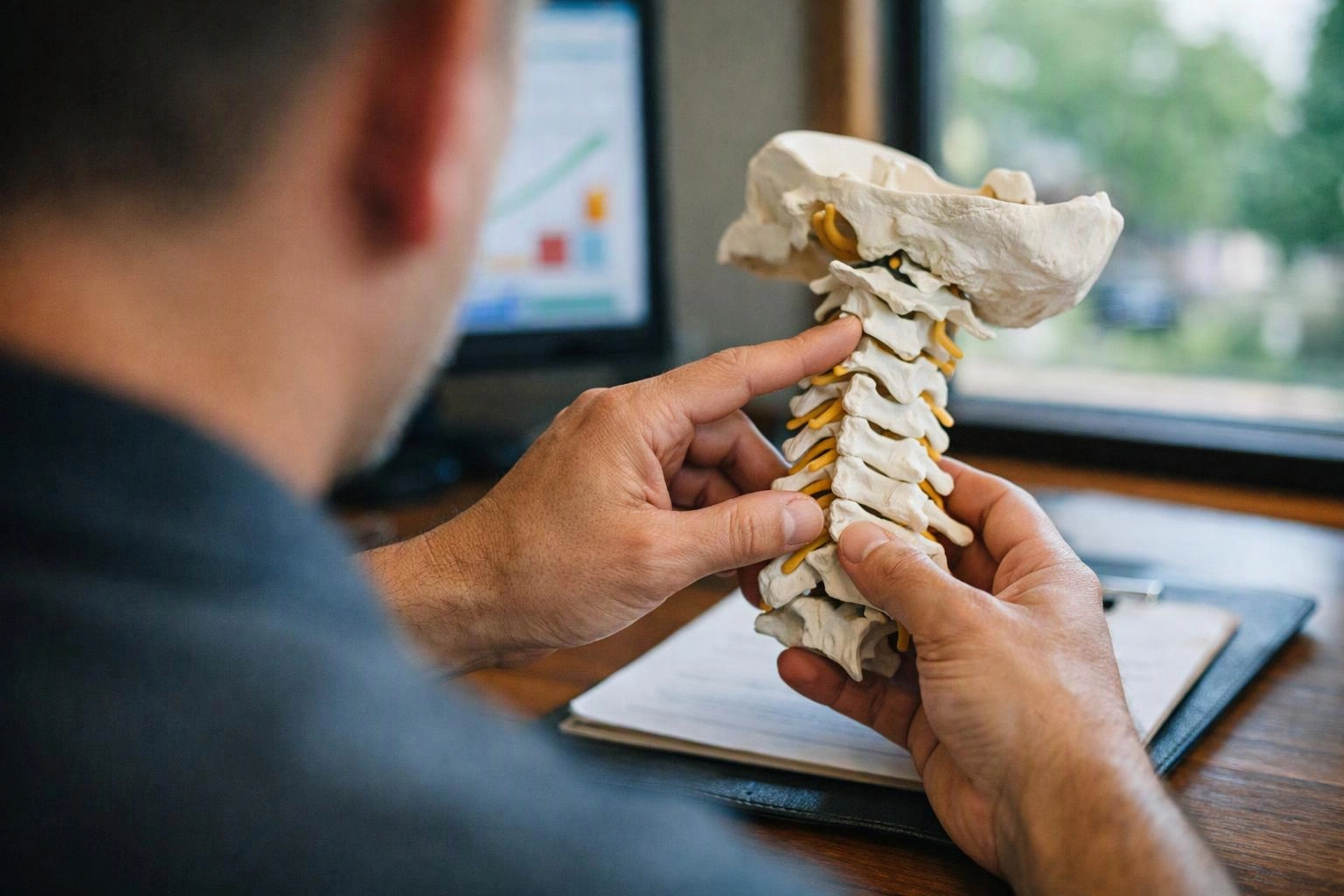
From the Arrowhead Clinic Chiropractic - Albany team
When we assess the cervical spine, we consider neck movement, posture, muscle response, and the location of reported symptoms. Our team connects these findings with the person’s daily activities before selecting an approach within Neck Pain Treatment.
Cervical Spine in Practice: A Real-World Example
A person who feels stiffness while turning the head may have limited cervical spine movement during driving or desk work. A clinical assessment can examine how the neck, upper back, joints, and muscles contribute to that movement pattern.
Related Services
Related Terms
Atlas Vertebra
Atlas Vertebra is the first cervical vertebra, located at the top of the neck beneath the…
Cervical Radiculopathy
Cervical Radiculopathy is a condition that develops when a nerve root in the neck becomes irritated…
Facet Joint
Facet Joint is a small synovial joint between the back portions of neighboring vertebrae. Facet joints…
Forward Head Posture
Forward Head Posture is a postural pattern in which the head rests ahead of the shoulders…
Arrowhead Clinic Chiropractic - Albany
Have Questions About Cervical Spine?
Contact Arrowhead Clinic Chiropractic - Albany for practical guidance on Cervical Spine and related chiropractor work in Albany.