
What Is Spinal Stenosis?
Spinal Stenosis is a narrowing of the spaces within the spine that can reduce room for the spinal cord or nerve roots. The narrowing may develop from age-related changes, enlarged joints, thickened ligaments, or disc changes. Symptoms can include back or neck pain, numbness, weakness, or leg discomfort during standing or walking.
Quick Facts About Spinal Stenosis
Category
Spinal narrowing condition
Used for
Understanding nerve pressure symptoms
Common confusion
Not identical to a pinched nerve
Also called
Narrow spinal canal, Spinal canal stenosis
Often discussed with
Pinched Nerve Treatment, Spinal Decompression Therapy
Key Takeaways About Spinal Stenosis
- Narrowed spinal spaces can affect the spinal cord or nerve roots.
- Symptoms may change with posture, standing, or walking.
- Spinal stenosis is not the same as a pinched nerve diagnosis.
How Spinal Stenosis Works
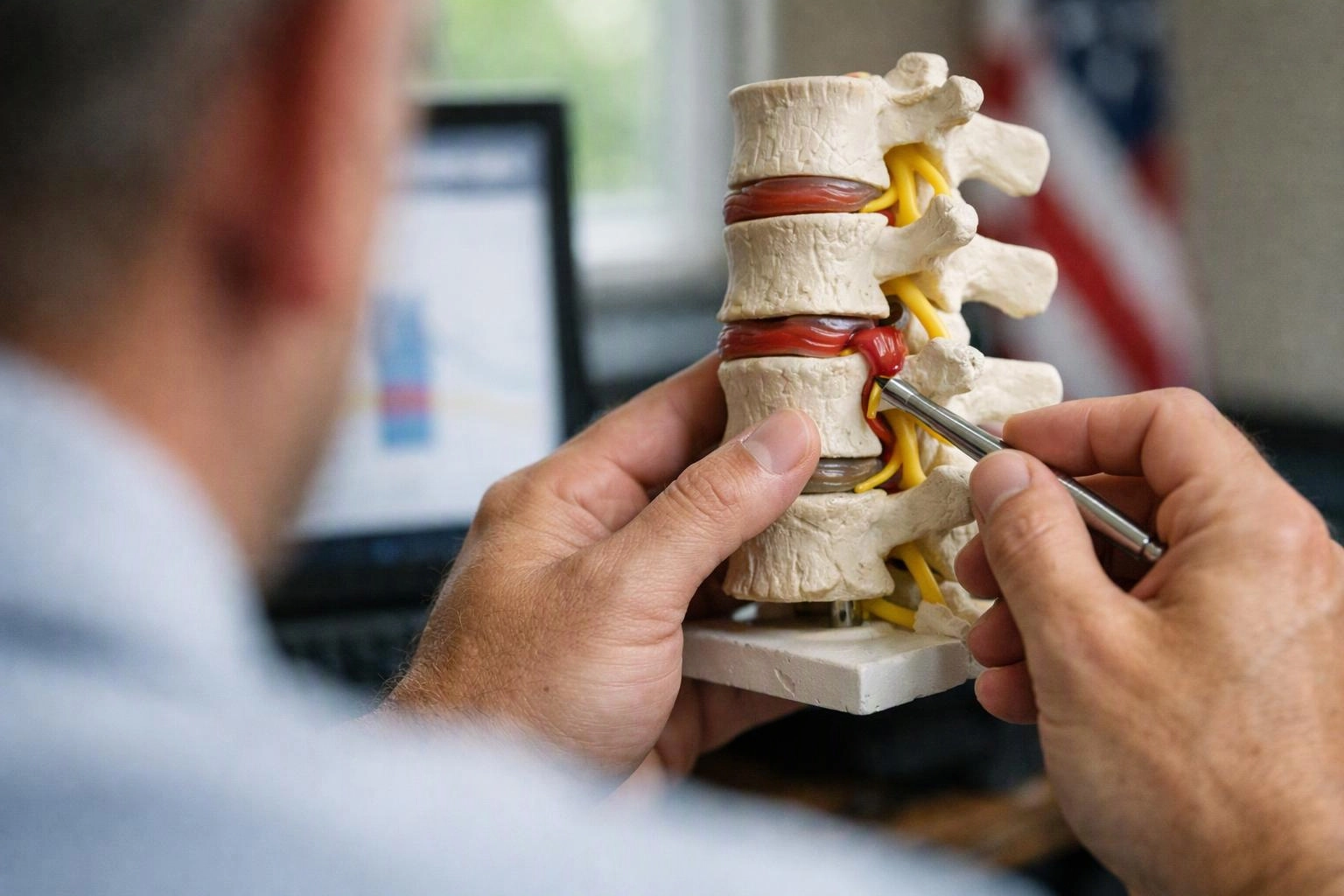
Spinal stenosis develops when changes in the vertebrae, discs, joints, or supporting ligaments reduce the open space around nerve tissue. The narrowing may occur in the neck or lower back. Its effects depend on the location and on which nerve structures lose room.
Related glossary terms: Lumbar Spine, Cervical Spine, Nerve Root.
Health professionals assess spinal stenosis by connecting symptoms with a physical examination and, when appropriate, imaging findings. Nerve roots may become irritated when space narrows near their exit from the spine. Pressure around the spinal cord can produce different symptoms from pressure on a single nerve root. A person may notice pain, tingling, weakness, balance changes, or symptoms that vary with body position.
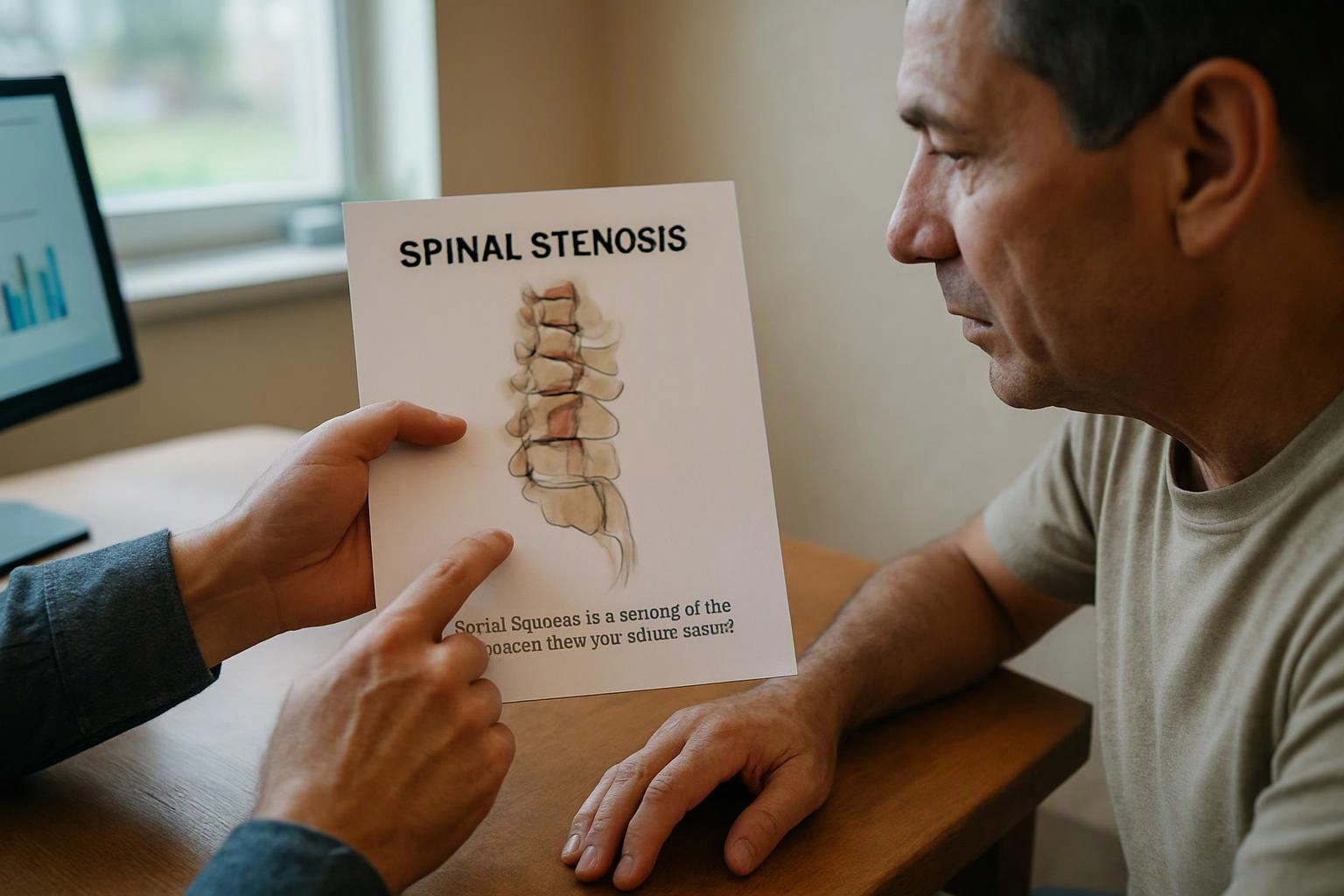
From the Arrowhead Clinic Chiropractic - Albany team
When we assess spinal stenosis during Pinched Nerve Treatment, we review symptom patterns, movement, posture, and nerve-related findings. We use that information to distinguish possible spinal narrowing from other causes of radiating pain. Our team also considers whether symptoms change with standing, walking, bending, or sitting.
Spinal Stenosis in Practice: A Real-World Example
A person with lower-back spinal stenosis may feel aching or tingling in the legs after standing or walking. Sitting or bending forward may change the symptoms, which gives the care team useful information during Pinched Nerve Treatment.
Related Terms
Lumbar Spine
The lumbar spine is the lower section of the back, positioned between the thoracic spine and…
Cervical Spine
The cervical spine is the neck section of the spinal column, located between the skull and…
Nerve Root
A nerve root is the part of a spinal nerve that branches from the spinal cord…
Spinal Cord
Spinal Cord is a long bundle of nerve tissue that carries signals between the brain and…
Arrowhead Clinic Chiropractic - Albany
Have Questions About Spinal Stenosis?
Contact Arrowhead Clinic Chiropractic - Albany for practical guidance on Spinal Stenosis and related chiropractor work in Albany.